
Snapshot
- Company: Ginger Pulse, a personalized nutrition and health app designed to help people make better everyday food choices, particularly those managing chronic health conditions.
- Founder: Jai Saini, 25-plus years in enterprise software, based in Dallas.
- Use case: picture-first meal tracking with personalized, in-the-moment suggestions, built for how people around the world actually eat.
- Before: mass-market wellness apps that kept suggesting fish to a lifetime vegetarian.
- After: a working beta born at the Bolt.new hackathon, refined ever since.
- Key metric: more than 100 waitlist signups in about ten days, with an App Store launch in sight.
The spreadsheet before the app
Jai Saini was watching a number move in the wrong direction. Every few months, his A1C test came back a little higher, and his physicians responded the way physicians do: more medicine.
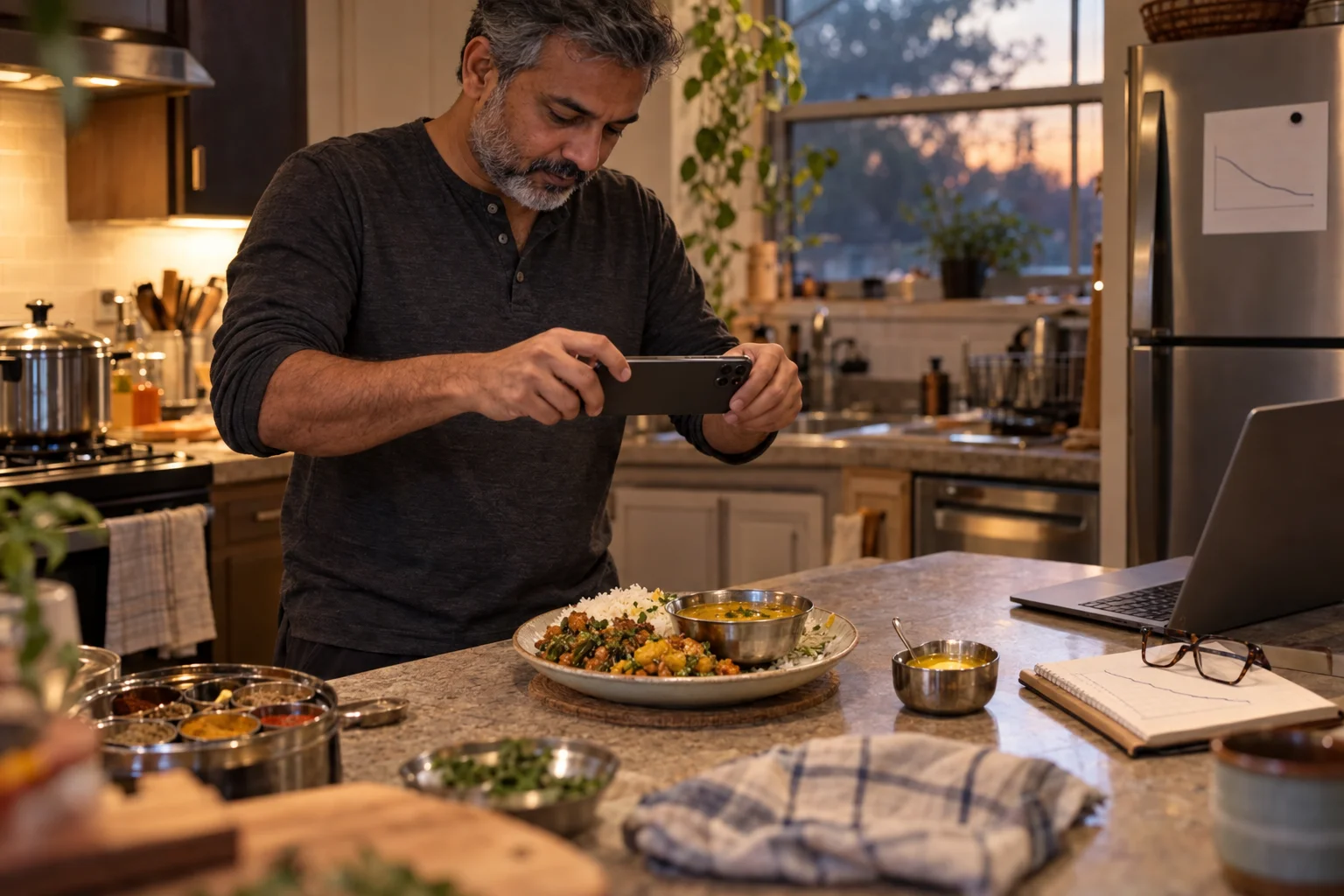
Jai responded the way an engineer does. He built a spreadsheet. Not a diet plan, not a cleanse, just a patient record of what he ate and what his blood sugar did about it. Then he made small trades a person can actually live with: a little less rice here, a walk after dinner there. Over about six months, he said, his A1C dropped from 7.5% to 6.3%. Anything at 6.5% or above reads as diabetes, so he had moved himself under the line. This was before Ginger Pulse existed. The app came later. What saved his numbers was a system, and systems can be shared.
Apps that don't know you
He'd tried the wellness apps first. They had opinions. What they didn't have was any idea who he was.
"I've told all these other apps that I'm a vegetarian," Jai said. "At least 50% of the time they would suggest fish, or add eggs to it." The advice arrived at the wrong moment, too: dinner's already on the plate, and the app suggests you make something else instead. Nobody's making quinoa at 8:30 on a Tuesday.
Diabetes management comes down to one question, and no mass-market app was answering it: what does this meal do to this person, today?
A mentor with a side project
When the Bolt.new hackathon came around in the summer of 2025, Jai signed up as a mentor for the Dallas area, helping other people get their ideas working. Between mentoring sessions, he quietly built his own. The first version of Ginger Pulse came out of that hackathon, and he never stopped working on it.
"If it wasn't for Bolt and the hackathon, this would have been an idea," he said. "Probably I would have developed it. But not necessarily this fast and at this level."
He's spent 25-plus years in enterprise technology and digital transformation, though the last decade pulled him away from the keyboard and into client-partner roles. Ginger Pulse pulled him back. He plans features in Bolt.new's plan mode before writing a line, branches in GitHub so his beta users never meet a broken build, and has tried the rest of the field: "I have used many other vibe tools. But for Ginger Pulse, I keep coming back to Bolt."
Know before you eat
The app's whole philosophy fits in one line of Jai's: "People should know before they eat, not after they have already eaten."
So Ginger Pulse starts with a photo of your plate. (You can talk to it, type, or scan a barcode, but the picture comes first.) It already knows your day: that lunch ran heavy on carbs, that you barely moved this afternoon. Instead of announcing a calorie count and wishing you luck, it makes one suggestion small enough to take: reduce the rice by half, maybe. And when nothing about the meal can change, it doesn't judge. It suggests a 15-minute walk after dinner.
One nudge at a time is the design. "You can't change a person in one day," Jai said. "But if you change a little bit every day, you can become a different person in a year's time."
No universally good food
Most nutrition apps are built on one database and one idea of dinner. Diabetes doesn't work that way: 589 million adults live with it worldwide, and 81% of them are in low- and middle-income countries (IDF Diabetes Atlas, 2025). Jai's family cooks curries, and the standard sources had no idea what was in them. So Ginger Pulse pulls from food databases for Indian, Australian, and Middle Eastern cooking alongside the usual US sources, and it learns your kitchen as you correct it. "I can say, no, this is not cooked in refined oil. This is cooked in clarified butter," Jai said. It remembers that the next time it sees your curry.
Even the scoring refuses to generalize. The same meal can rate green tonight and yellow tomorrow, because tomorrow you'll have had a different day. "There is no universally good food," Jai said. Only food that's good for you, right now, given everything else.
A hundred people said yes
When the app was ready for eyes other than his, Jai built a website in Bolt.new and shared it with his friends and personal contacts. More than 100 people joined the waitlist in about ten days. He's onboarding them slowly, on purpose: a private beta first, a smarter notification system and Apple Health and Google Health connections before the wider release, then the App Store. Investors in Dallas have started asking, and he isn't rushing.
He hadn't written code regularly in a decade. The satisfaction of making something new and useful came as a bonus: "I actually forgot how good it used to feel," he said.
He has a theory about the people he built it for. "Most people actually want to do the right thing. It's just, doing the right thing is not the easy thing."